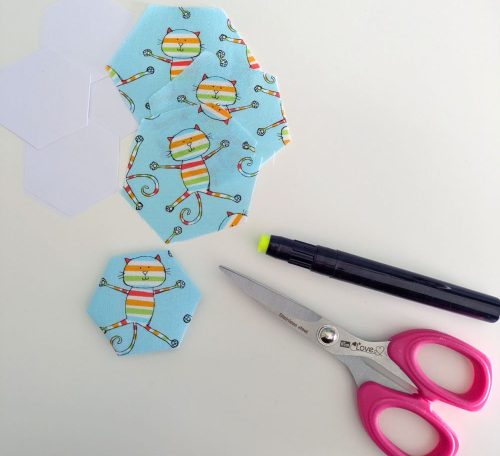
This introduction to English Paper Piecing will teach you how to sew hexagons, the most commonly used English Paper Pieced shape.
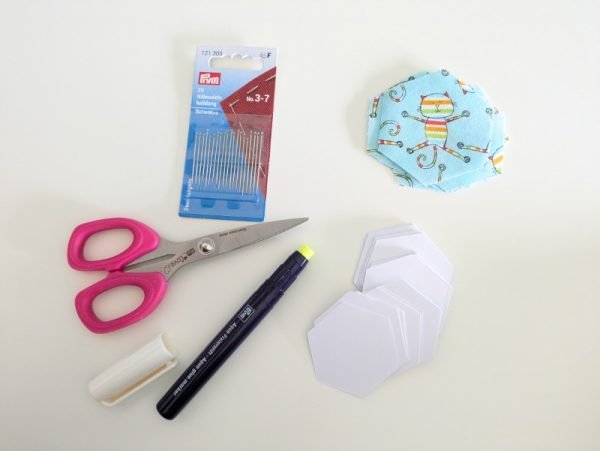
English Paper Piecing Supplies
English Paper Piecing, (often referred to as EPP), is the technique of folding fabric over paper templates and hand sewing these together. The paper template shape ensures the blocks are accurate and also makes it easier to piece angles together.
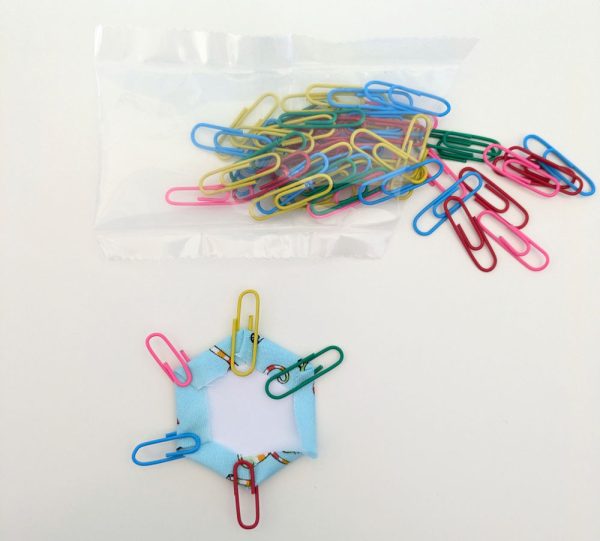
Paper clips (optional) – I find them handy to hold the folded fabric in place before I stitch or glue it.
Thank you to our website sponsors Prym for supplying several of the supplies needed for this tutorial.
English paper piecing is portable making it ideal to take on the go. Plus you don’t need a sewing machine, and only a few supplies making it ideal for beginners or stitchers on a budget.
How to English Paper Piece
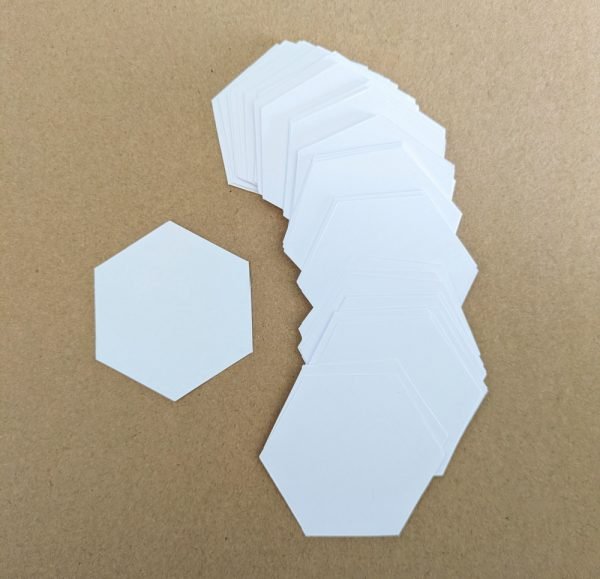
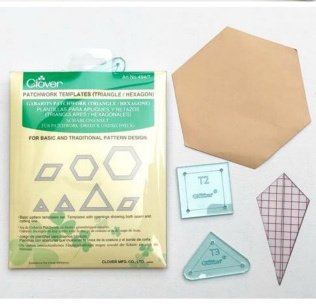
Select your paper templates, you can buy pre-cut shapes or print out and cut your own at home.
Tip – Freezer paper templates are great, these can be ironed to you fabric and peeled off later.
Popular shapes include Diamonds, Pentagon, Dresden plates & of course Hexagons.
Remember when looking at the size of hexagon templates the sizes refer to one size so for 1inch hexagons each side measures 1inch. The template we’ve included is for the commonly used 1 inch hexagons.
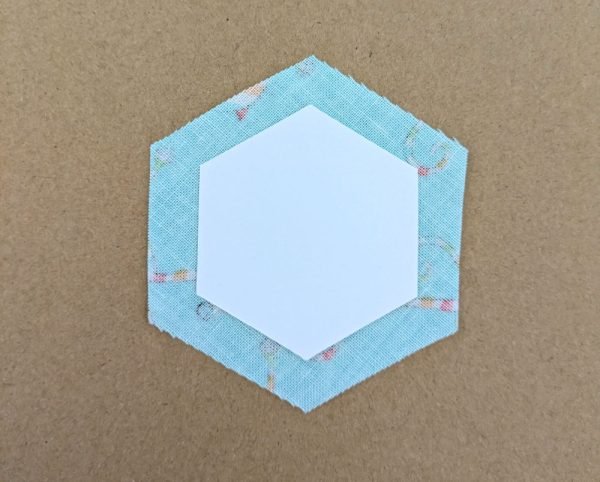
Next cut out your fabric shapes, these should be a least ¼ of an inch larger than the paper templates so that you can fold over the paper.
Fussy Cutting
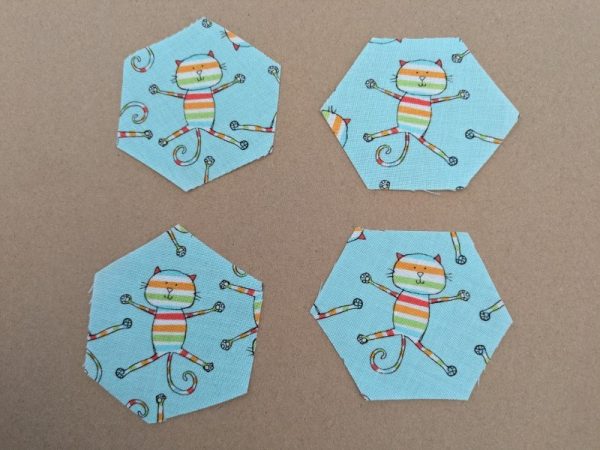
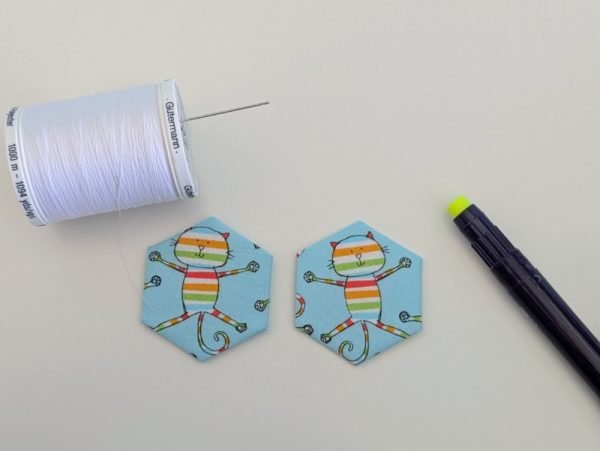
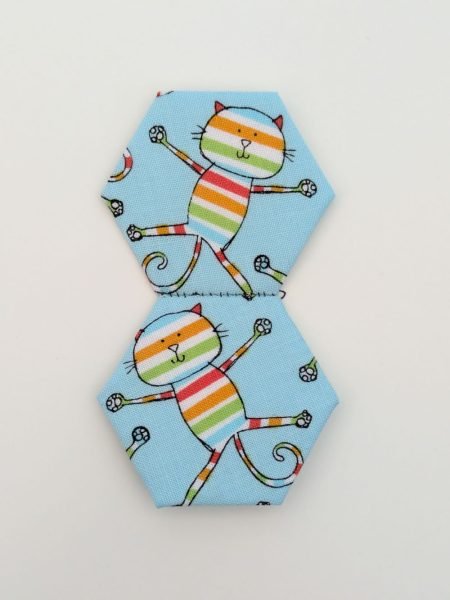
English paper piecing is ideal for a patchwork technique called fussy cutting. This is where you strategically cut your fabric to highlight certain motifs in the fabric. As you can see in the photo above I’ve cut around the cats to centre them in my hexagons.
The easiest way to do this is to place your paper template on the front of the fabric covering the shape you want, then cut around it. If you want to view the motif better cut out the middle of a paper template so it gives you a viewing window and use that to fussy cut your fabrics.
Use a patchwork ruler to add ¼ of an inch and cut with scissors or a rotary cutter.
Tip – if you do lots of paper piecing you can purchase die cutting machines which will cut the paper and your fabric perfectly and through several layers at once.
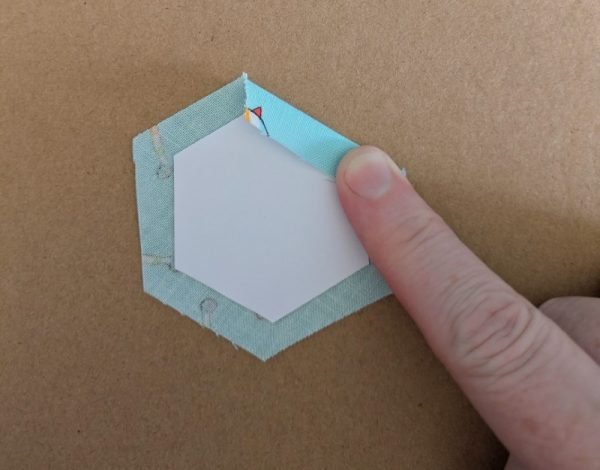
Fold your fabric over the papers press with your fingers, this is called finger pressing. It helps to temporarily hold the fabric in place until you baste it using one of the methods below
Thread basting
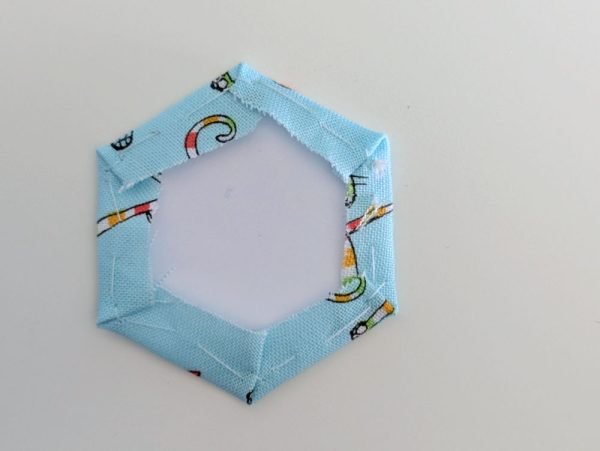
Thread basting uses thread to hold the folded edges of the fabric together on the back of your paper template. So the fabric retains the shape of the template.
I do 2 stitches on each corner to hold the fabrics together and a single stitch along the side to get to the next corner. I only sew through the fabric, not the papers too so I don’t have to remove the thread later.
Some people sew through both the paper and fabric but then you’ll need to remove the stitches once you’ve joined your shapes together if you do it that way as they will be visible on the front.
I find using paper clips to hold the fabric in place before I thread baste is very handy and makes the stitching process easier. You just remove each clip as you sew along that edge. So I would start with the unclipped corner, knotting my thread and sewing 2 stitches. Then remove the green clip, sew along that edge and then double stitch that corner. Repeat as you move around the hexagon.
Glue basting
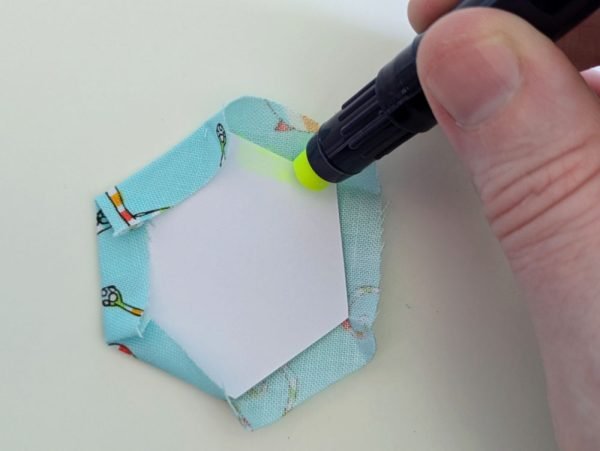
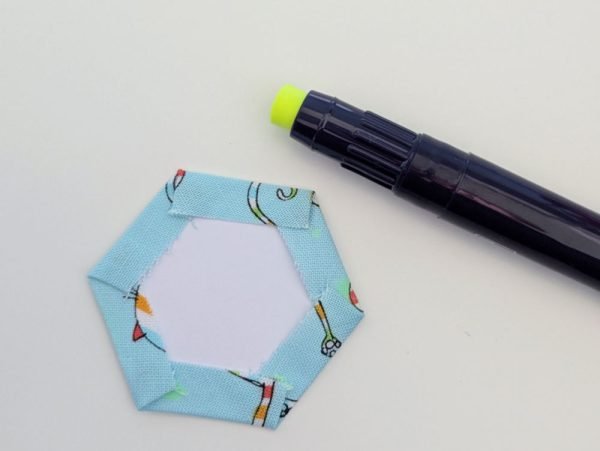
To glue baste you run the glue stick along the edge of your template then fold the fabric over and press it into the glue. Repeat for all the other sides. You may want to put a little glue under each folded fabric corner to help them lie flat as well.
Basting with a fabric basting glue stick is quick but can make papers damp and therefore harder to fold fabric neatly, and can be harder to remove the papers at the end. Your fingers may get a little sticky too.
As you can see once basted both hexagons look the same. The right is the glue basted hexagon and the left is the thread basted hexagon.
Joining English Paper Pieced Shapes
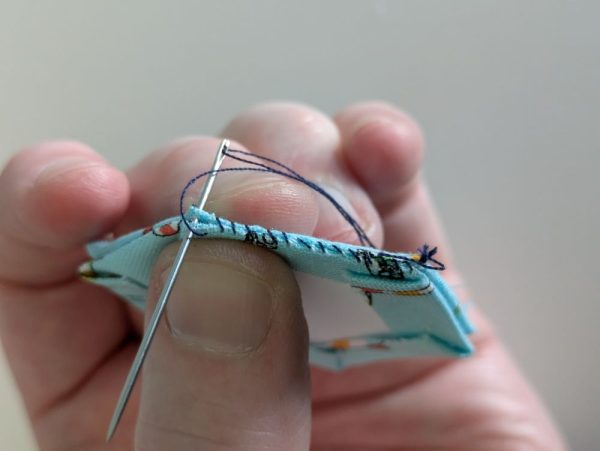
Next place 2 of your shapes together right sides facing, and whip stitch the edges together. To whip stitch – sew small stitches across the fabric with you needle going straight across your two patchwork pieces, go through just a few threads of fabric each time. Traditional patchwork books suggest 18 stitches per inch. Use a fine thread e.g. a 60 weight cotton that blends in well, fine threads do tangle easy, use a thread that you enjoy to sew with as long as it blends in ok.
For the photo above I used a thicker contrasting thread so you can see the whip stitch clearly. When you join your shapes you want the thread to blend with your fabric so the stitching is invisible from the front.
Carefully remove your papers and press with an iron. (If you have used basting glue iron on medium heat first the warm glue will allow you to remove the papers more easily).
Your EPP project is ready to quilt, use as appliqué shape, or even make into a pincushion etc.
As you can see above because I used a contrasting thread you can see the stitches from the front. With a matching thread you won’t.