This guide to help you choose the ideal sewing pattern for your body shape article has been written by Jan Morton. Jan owns The Style Architect, and runs a series of workshops from her studio in North East Hampshire. There are workshops related to body shapes where you will choose and sew a pattern to suit you. The next sessions are in 2016 – visit http://thestylearchitect.co.uk/ to find out more and to book your place.
You love to sew, you love to make your own clothes and when you get it right it’s fantastic. But….. you have any number of unfinished garments because all too often something isn’t quite right. You fiddle a bit but it’s just not right. I’ve done it many times too and then I learnt how to get it right before even picking up a pair of scissors.
There are so many choices out there for commercial dressmaking patterns, so how do you know what to choose? Think about what suits you and your body shape – forget the apples and pears and let me share some great advice on defining your body shape and some general guidelines about which styles to choose that will suit you best.
Knowing your Body Shape
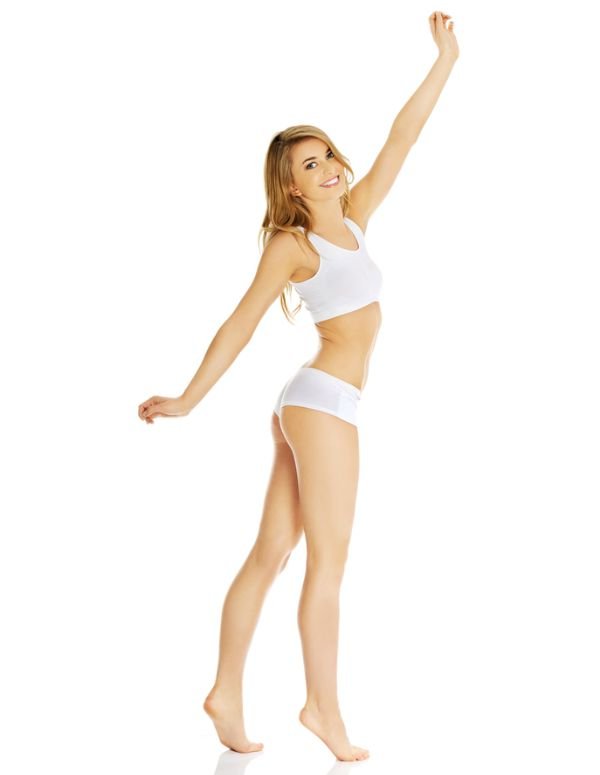
Pattern companies often list multiple body types on one pattern and I’ve found over time that it doesn’t really help. My guidelines are a little more straightforward with four body types based on straight and curved lines.
Your clothes & accessories should follow the external lines of you body. You need proportion to create a balance and a visual harmony between all areas of the face and body and you do this with clothing design, texture, colour & pattern. The aim is to create illusion but first know your body shape:
TOP HALF | BOTTOM HALF | CHARACTERISTICS | STYLE CHOICES |
Curve | Curve | Round face, curved shoulders, ribs, hips, defined waist, curvy thighs | Rounded, curved necklines, revers and soft collars, details with curves or gathers, dolman sleeves or fitted, highlight a curved waist |
Curve | Straight | Round face, curved shoulders, straight hips, no defined waist, straight thighs & hips | As above, at the top, as below fo r the bottom half |
Straight | Straight | Angular face, straight shoulders, ribs, hips, undefined waist, straight legs | Square or angular necklines, peak collars, notched lapels, square pockets, fitted sleeves, horizontal or vertical detail |
Straight | Curve | Angular face, straight shoulders, straight ribs, curved hips, defined waist, curvy thigh | Square & angular detail at the top, curved and soft detail and shape at the bottom |
Defining your Style
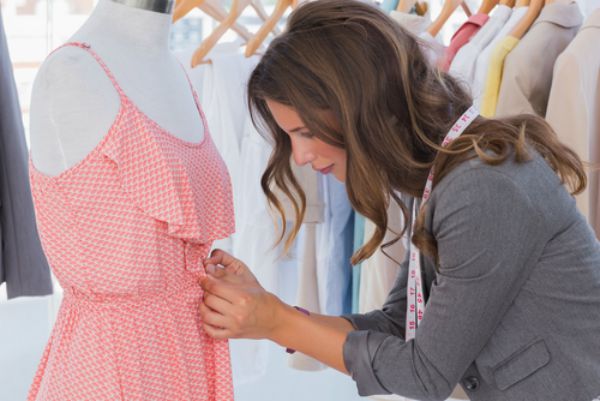
Once you are aware of your body shape and have an idea of what you are looking for on a pattern envelope, then knowing the best style for you involves developing an understanding of :
Line
Scale
Proportion
Colour
Texture
Fit
Line
There are two types of line – inside lines and outside lines.
Outside lines are the silhouette that create your shape. For example an A-line skirt will make you appear wider and shorter than a pencil skirt which generally has a longer, thinner silhouette, making you appear taller.
Inside lines are the details – vertical & horizontal lines in the design features or on the fabric. Any vertical lines in the detail will give the appearance of length and height, whilst horizontal lines appear to add width and shorten. Diagonal lines serve to divert and confuse the eye, whereas curves add roundness and soften the look.
The hem line is a strong line so, where you can, avoid the widest part of the leg or hip as it will only serve to emphasise the width.
Check the lines of the garment on the pattern envelope, make sure they are going to work to your advantage; just because it looks amazing on the model or the illustration it may not suit your body shape.
Scale
Scale is about creating a balance between all of your physical features and shapes with the choices you make in the style of the outfit, the fabric weight and texture, the weave and the colour.
Understanding the scale of your body helps you choose fabric. A taller or larger frame can generally take bigger bolder prints and heavier textured fabrics whereas the smaller and petite frame is better with smaller, prints and less textured fabric.
Proportion
Someone, somewhere has a body with Ideal body proportions (you just haven’t found them yet!); that is, your height is equal to 8 times your head height, your hips are in the middle, your waist is 3/8 down, and knees 6/8 from the top.
In a style consultation we would work out proportions through body mapping, identifying those parts which are out of proportion and by how much. Once you have this information, you know what you need to balance the look.
Understand the proportions of your body and choose styles that will emphasise great proportion.
Colour
Knowing and wearing the right colours will make you shine, generate confidence, make you look fantastic and feel amazing. It makes shopping for fabric, as well as clothes, much easier. If you know the colours that suit you the very best you will stop buying fabric and clothes that don’t flatter you.
You can also create illusion with colour; darker colours make you appear smaller whilst lighter colours make you appear larger.
Use colour to your advantage to create a balanced look.
Texture
When buying fabric, you need to consider what it is you’re making, what type of fabric will suit the garment and what sort of fabric will suit you. The pattern envelope will give suggestions for the best type of fabrics to use. The weight of the fabric is important in considering the garment you want to make and patterns always advise – generally, they get it right but you must also be aware of scale and proportion. Petites won’t want to wear highly textured heavy weight fabric.
Here is a guide to the effects of some fabric types:
FABRIC | TEXTURE | EFFECT |
Single knit, silk jersey, chiffon, crepe-de-chine | Very soft & clingy | Follow body curves closely |
Georgette, light weight gabardine, Tissue faille, wool jersey, ultra-suede | Soft & Durable | Fall softly over curves, slimming in soft styles |
Dress linen, double knit, brushed denim, chino, gabardine, flannel | Moderately crisp | Hold garment away from the body, don’t cling |
Linen suiting, heavier pique, heavy denim, satin, taffeta | Very crisp | Stand away from the body, enlarge the figure |
Tweed, velour, wide whale cord | Bulky, course, fuzzy | Enlarge the figure, can over-power |
Gabardine, chino, broadcloth | Smooth | Flattering to most |
Satin, metallic | Shiny | Reflects the light and increases body size |
Matte jersey, flannel, gabardine, interlock jersey | Dull, matte | Absorbs light and minimizes body size |
Fit
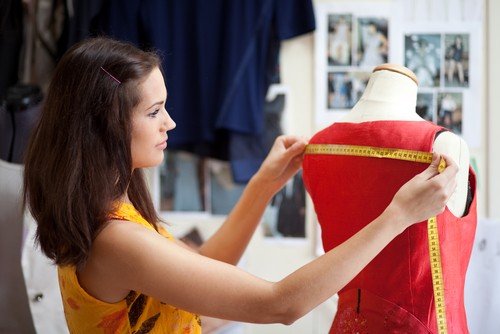
You make your own clothes because you can’t find anything in the shops that fits your body shape and size. The fit of your garments is what creates a great image – by sewing yourself, you can get it right when you have issues that don’t seem to be catered for in the standard shop sizes.
Before you lay the pattern on the fabric and pick up your scissors:
Measure as a minimum: Bust – Waist – Hip.
Identify the relevant sizes on the back of the pattern – remember it’s only a number, US sizes are different than UK sizes.
As a dressmaker you have the ability to measure every other part of your body and alter the pattern accordingly – shoulder width, neckline, bust measurement, waist, body length, and so on.
Use the multi-size pattern by grading one size to another, draw a line and cut the new line.
Add length or reduce length at the right point.
If you need to make a big adjustment, e.g bust adjustment, sway back, rounded back etc., learn how to do it. Once you know how, you can repeat every time.
Make a toile and adjust as you go along.
To find out more about Jan’s workshops and to further explore the techniques introduced here, visit Jan’s website – The Style Architect.
To find out how to understand sewing patterns read our guide here.